ShitBot documentation
Installation and everyday use
- Installation and deployment: platform JARs, first startup, and deployment options.
- Configuration: key settings in
config.ymlandcommands.yml. - Commands and permissions: admin commands, QQ commands, shortcuts, and permission checks.
- Server startup notices: proxy startup, waiting for a backend, reconnection retries, and reloads.
- PlaceholderAPI variables: status/binding placeholders and PAPI data in images.
- Custom backgrounds and pixel coordinates: prepare a PNG background and position variables.
- Image rendering and advanced templates: built-in and advanced modes, optional components, scenes, the editor, and the plugin API.
- Troubleshooting: connections, forwarding, binding, databases, and proxy commands.
Server networks and data
- Proxies and backend servers: the command channel between BungeeCord/Velocity and Spigot backends.
- Databases and migration: SQLite, MySQL, platform migration, and EasyBot imports.
- Inventory queries and textures: offline snapshots, resource packs, mod items, and custom icons.
Maintenance and development
- Plugin API and whitelist management: asynchronous bindings, whitelist entries without QQ, image rendering, Base64, and file export.
- Platform compatibility: recorded environments, platform differences, and optional dependencies.
- Upgrading and automatic updates: manual upgrades,
/shitbot update, and release signatures. - Production security checklist: OneBot, databases, command transport, permissions, and logs.
- Building and development: Maven builds, modules, and release artifacts.
For a first installation, read Installation and deployment, then Configuration. Configure Proxies and backend servers only if you need QQ commands to run on backends.
QQ command examples in these English pages use the built-in en_US aliases unless stated otherwise. Set language: "en_US" in config.yml and reload to use them. Changing the documentation language does not change the plugin's configuration.
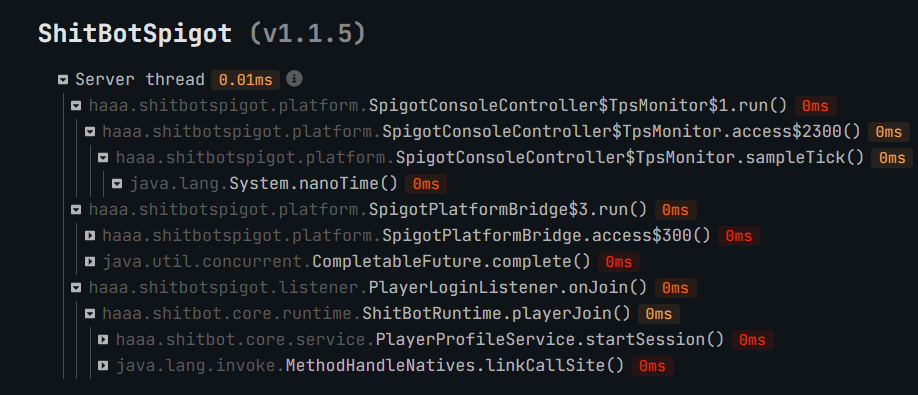
Spark